Updates tailored to you.

Across the global marina landscape, operators are under increasing pressure to maximise asset value, diversify revenue streams, and create differentiated guest experiences.
For marina operators and waterfront hospitality groups, the opportunity is clear. Beyond berths, fuel docks, and maintenance yards lies a largely untapped canvas, one that can be activated through floating hospitality concepts.
Historically, marinas have operated on a relatively fixed revenue model: berth fees, fuel sales, and maintenance services.
While stable, these income streams are often limited in upside and highly sensitive to seasonality, occupancy, and local competition. Margins remain thin, and growth typically requires physical expansion, which is an expensive and complex undertaking, particularly in regulated coastal environments.
At the same time, guest expectations are evolving. Today’s traveller is not just looking for a place to dock, they’re seeking experiences, community, and lifestyle-driven destinations with a sustainable footprint.
This is where the traditional model begins to fall short.
A new category is emerging at the intersection of marine infrastructure and hospitality: floating, experience-led environments that transform marinas into vibrant social and lifestyle hubs.
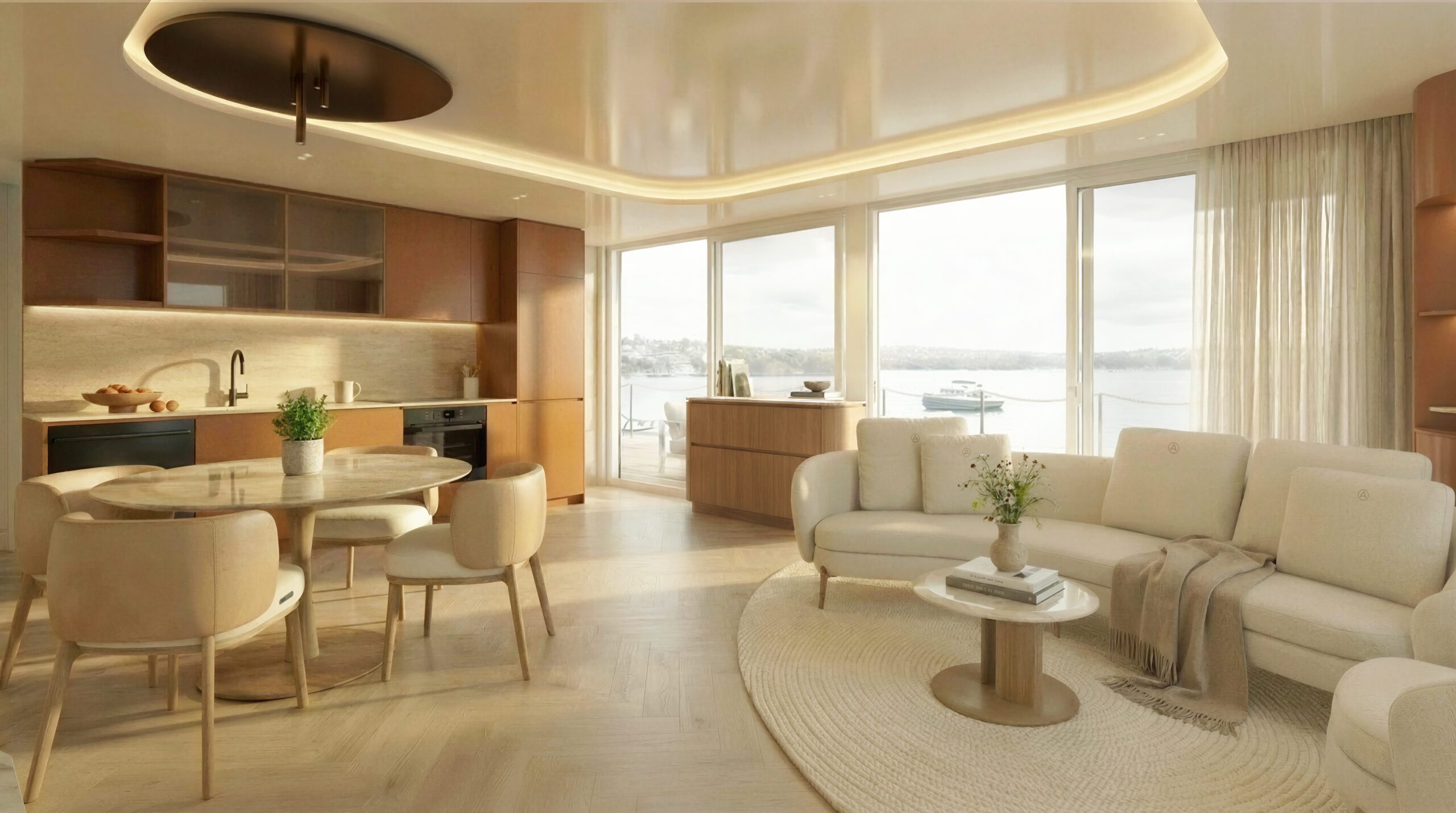
Companies like ARKHAUS are pioneering this shift through a fleet of design-led hospitality yachts that blur the line between vessel, venue, and real estate.
These modular units are not traditional yachts in the leisure sense, but floating hospitality platforms that can function as:
By deploying the ARKHAUS yachts within marina environments, operators can activate previously underutilised water space and introduce entirely new guest experiences without altering their core infrastructure.
Rather than viewing water as a passive boundary, this model treats it as a premium, revenue-generating floating venue that doesn’t compromise on sustainability..
One of the most compelling aspects of floating hospitality is its flexibility.
Unlike traditional developments, which require years of planning, permitting, and capital investment, ARKHAUS yachts are modular, movable, and designed for deployment across multiple locations.
This introduces a new operational model. For example, a floating restaurant concept can operate in Dubai during peak winter season and the same ARKHAUS unit can then be relocated to the Mediterranean for summer. Operators can scale their footprint up or down depending on demand, events, or occupancy trends.
This level of mobility fundamentally changes how hospitality assets are utilised. Instead of being tied to a single geography, the investment becomes dynamic. These revenue-generating units can simply follow demand and maximise yield across seasons, regions and marina groups.
One of the biggest barriers to growth in waterfront hospitality is development complexity.
Coastal construction is expensive, heavily regulated, and often constrained by environmental and spatial limitations.
Floating hospitality offers a capital-efficient alternative:
For operators, this opens up new possibilities:
In many cases, ARKHAUS can be integrated into existing marina layouts with minimal disruption, making them an attractive plug-and-play solution.
As global tourism continues to evolve, destinations are competing not just on location, but on experience. Waterfront properties already hold a natural advantage, but many have yet to fully capitalize on it.
Floating hospitality represents a shift in mindset:
Looking ahead, the integration of floating hospitality into marina and resort ecosystems is likely to accelerate.
As operators seek new ways to differentiate, increase yield, and respond to changing guest behaviours, the ability to activate water space will become a key competitive advantage.
ARKHAUS offers a glimpse into this future, where hospitality is no longer confined to land, and where the most valuable square metre might not be onshore, but floating just beyond it.
For those willing to rethink how water is used, the upside is significant.
For more information please contact: hello@arkhaus.co