Updates tailored to you.


There is a particular kind of anxiety familiar to anyone who has spent a night at anchor.
The wind shifts. The boat moves. You wake suddenly, unsure whether the vessel is safely swinging or slowly drifting. You check the instruments. Then you check again. Sleep becomes impossible.
For Thomas Frizlen, founder of AnchorGuardian, that nagging uncertainty became the seed of a business and the obsession that kept him working on the problem for years before the right solution finally emerged.
“It came from personal pain,” he says. “Traditional anchor monitoring systems are very reactive. It’s like a fire alarm – you don’t want the alarm once you can already see the flames. Ideally, you want to know before the fire even starts.”
That is the gap AnchorGuardian was built to close: not simply alerting captains and crew when an anchor is dragging, but helping them prevent the situation from happening in the first place through earlier, more reliable information.
A Founder Built From Experience
Frizlen came to entrepreneurship the long way around.
He started as a sailor and sailing instructor before moving into engineering and eventually crossing into commercial business roles. By the time he founded Swiss Ocean Tech Ltd, the company behind AnchorGuardian, he was drawing on decades of experience spanning maritime operations, technical systems and business.
“I’m not a spring chicken anymore,” he says with a smile. “I’ve had the chance to build quite a lot of experience.”
That experience shaped how he approached building the company from the outset.
Rather than starting with technology and looking for a problem to apply it to, Frizlen worked in the opposite direction. The pain point came first (one he knew intimately), and only then did he begin looking for a solution.
“I think one of the most important things when building a startup is that you don’t start with the technology,” he says. “You start with the pain.”
The early validation process was far from glamorous, but highly effective.
Armed with little more than a PowerPoint presentation, Frizlen visited boat shows and shipyards, explaining the concept and asking people whether they thought the problem was worth solving.
The response was encouraging. But the moment he remembers most clearly came at the Monaco Yacht Show.
He bought a ticket, walked the docks and started knocking on superyacht doors, introducing himself to captains he had never met before.
“I’d say, ‘This is what we’re thinking about building — what do you think?’” he recalls. “And the feedback was incredible. That’s when it clicked: it wasn’t just my problem.”
Few moments are more clarifying in a founder journey than realising that a frustration you thought was personal is widely shared.
For Frizlen, it was the confirmation he needed to commit fully.
The Monaco Moment
One of the early captains he encountered turned out to be something of an anchoring enthusiast – deeply knowledgeable on the subject and immediately receptive to what AnchorGuardian was trying to build. That captain became the company’s first paying customer and, eventually, one of its most important advocates.
In an industry where trust moves slowly and peer recommendation carries enormous weight, that mattered.
“We had to show the market that it was actually working,” says Frizlen. “We needed a captain who had paid for the solution and could say, ‘Yes, this brings the value I expected.’ That was a big step.”
For marine founders, credibility is rarely won through marketing alone.
Products are adopted because respected operators trust them, recommend them and are willing to publicly stand behind them.
For AnchorGuardian, that first customer became proof that the company was solving a real operational problem: not simply creating another layer of onboard technology.
Safety, Sustainability and an Unexpected Benefit
As the solution evolved from concept into working hardware, another dimension began to emerge.
What had initially been designed as a safety proposition also revealed an environmental benefit.
Dragging anchors can cause significant damage to seabed habitats. Better anchor monitoring, and the kind of predictive, proactive alerting AnchorGuardian delivers, means boats remain where they are intended to stay, reducing unnecessary impact on sensitive ecosystems.
For Frizlen, a lifelong sailor with a deep connection to the ocean, the realisation felt particularly meaningful.
“We realised we were improving sustainability in anchoring at the same time,” he says. “As a sailor with a passion for the ocean, that felt genuinely rewarding. It’s a win-win: better safety and lower environmental impact.”
It was not part of the original business thesis. But for a founder motivated by the realities of life at sea, it added another layer of purpose to the mission.
The Fundraising Reality
If there is one aspect of the founder journey Frizlen admits he underestimated, it is the relentlessness of fundraising.
Not the existence of it but the fact that it never really stops.
“The day you finish one fundraise, you’re already thinking about the next,” he says.
“You want to focus on building the company and delivering on the mission, but you also have to warm up investors, educate them and secure funding. It takes time away from execution.”
The challenge was compounded by two realities working against him simultaneously.
First, AnchorGuardian sits in the difficult middle ground between hardware and software – meaning longer development cycles, higher capital requirements and more operational complexity than a pure software startup.
Second, the marine industry itself remains unfamiliar territory for many venture investors.
“It’s a double challenge,” he says. “You’re building a hardware-software company, and you’re doing it in an industry many investors don’t fully understand.”
In the early years, roughly ninety per cent of the company’s backing came from business angels rather than institutional venture capital.
AnchorGuardian was building something category-defining in a niche market: a difficult proposition for investors who typically prefer familiar sectors with established demand.
“In the beginning, it was very hard to talk to VCs,” Frizlen says. “We were too early, and it was a market they didn’t really know well. Without the business angels, I wouldn’t be sitting here.”
As the company moves deeper into its growth phase, those conversations are beginning to change. Promise is gradually being replaced by traction.
“In the beginning, it was about selling dreams,” he says. “Now it’s more about selling traction to strategic VC investors. The story changes over time.”
Moving Beyond Startup Mode
Ask Frizlen whether AnchorGuardian has achieved product-market fit and the answer is characteristically measured.
“I’m not entirely sure what stage we’re at,” he says. “We’re not really a startup anymore, but I wouldn’t say we’re a scale-up yet. We’re somewhere in between.”
Interestingly, the signal that the startup phase was ending had little to do with revenue or fundraising. It was operational.
“We knew it when we started worrying about the nitty-gritty details — processes, production, things like that,” he says. “That’s when you realise you’re leaving the startup world.”
Distribution has become a major focus.
The founder-led approach of turning up to boat shows and selling directly was essential in proving the market, but Frizlen is clear-eyed about its limitations. It does not scale.
AnchorGuardian is now building a network of regional distributors and installation partners, recognising that customers want trusted, local support.
“If a customer in the US has a problem with AnchorGuardian, they don’t want to think, ‘There’s a company in Switzerland — how quickly are they going to react?’” he says. “They want someone local they know and trust.”
That combination of certification, regional partners and respected reference customers is how trust (arguably the most valuable currency in marine hardware) is built.
What He Knows Now
For founders building in similarly difficult territory – hardware, software, long cycles and niche industries – Frizlen’s advice is grounded less in inspiration than realism.
“Know your limitations. Know where you want to go. Then act accordingly,” he says. “Because if you don’t deliver on your promises, you won’t last very long.”
It is practical advice, delivered with the steady realism of someone who has spent much of his life navigating uncertain conditions.
A founder’s version of a sailor’s discipline: understand the environment, be honest about the risks and stay precise about the course ahead.
For someone who spent years thinking about how to keep a boat exactly where it is supposed to be, it feels entirely fitting.
—
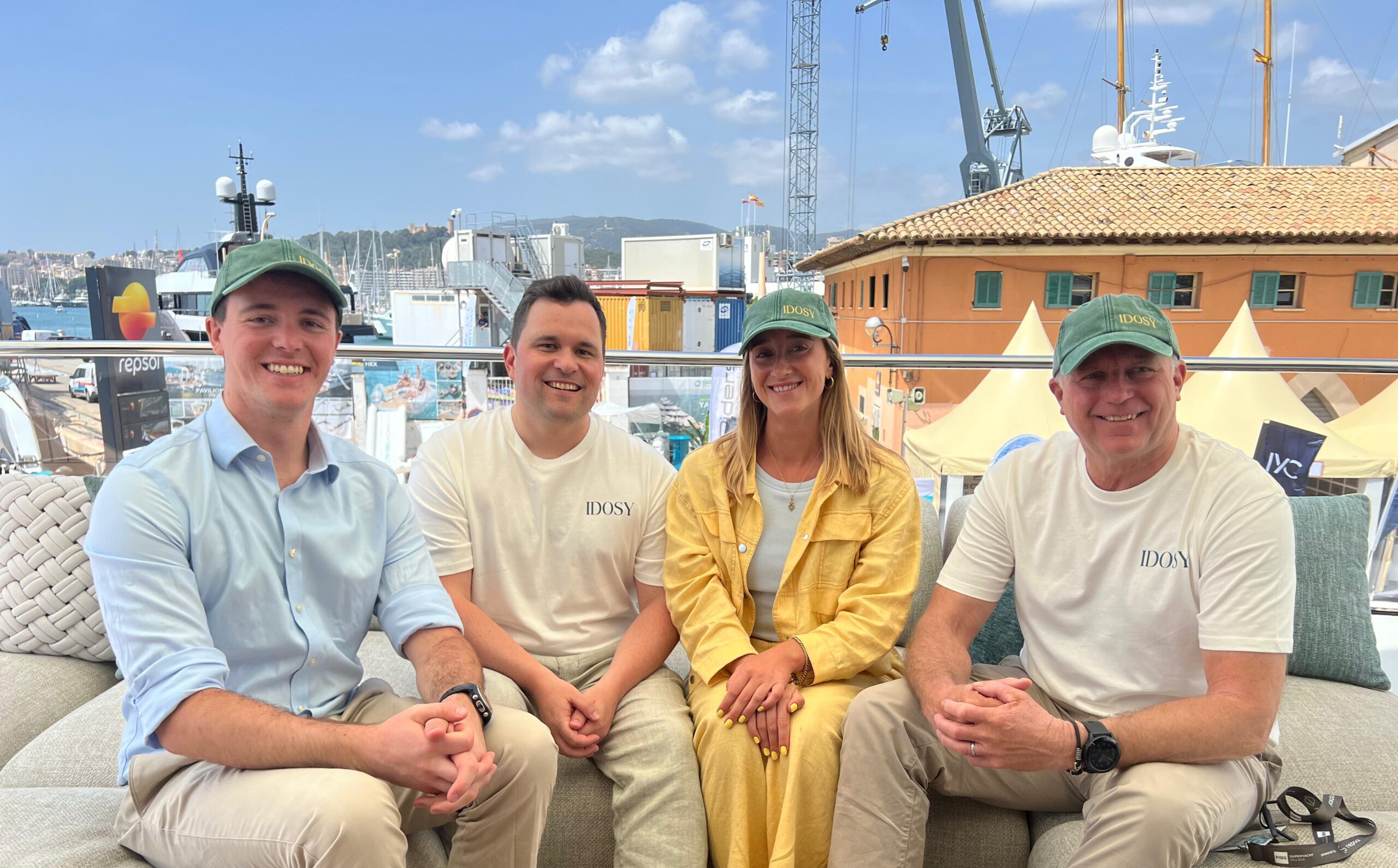
Thomas Frizlen was interviewed as part of the Founder Podcast Series, a collaboration between the Ben Taylor Podcast, Yachting Ventures, and Marine Industry News, filmed on board the San Lorenzo M/Y ON TIME at the Palma International Boat Show in 2026.