Updates tailored to you.

Building a startup is hard. Building a hardware startup is harder.
That was one of the recurring themes from our latest Hardware Founder Mingle, where founders from across the yachting industry came together to discuss the realities of bringing physical products to market.
From manufacturing and supply chains to intellectual property battles and fundraising, the conversation offered a candid look at the challenges facing hardware entrepreneurs today.
Unlike software businesses, hardware startups face significant upfront costs before they can even begin selling at scale.
For many founders, rapid prototyping is essential to product development. Overseas manufacturers in places such as China often provide significantly faster turnaround times and lower costs than local alternatives, allowing startups to iterate quickly and get products into the hands of early users.
However, these decisions come with trade-offs. Founders must constantly balance speed and affordability against concerns around intellectual property protection, quality control and supply chain resilience.
Several founders highlighted the importance of building local supply chains wherever possible, particularly as geopolitical uncertainty and manufacturing disruptions continue to affect global markets.
Yet even with a strong preference for local production, specialist components can still be difficult or prohibitively expensive to source close to home, forcing founders to make practical compromises.
One of the most eye-opening discussions centred around intellectual property protection.
For many early-stage hardware companies, securing patents and trademarks is only part of the challenge. Enforcing them can be significantly more expensive.
Founders shared experiences of encountering copycat products and discovering just how costly legal action can become. For startups operating with limited resources, pursuing litigation is often unrealistic, regardless of how strong their legal position may be.
As a result, many founders are exploring more practical approaches to protection. These include design registrations and customs enforcement mechanisms that can help prevent copied products from entering key markets without requiring lengthy and expensive court proceedings.
The consensus was clear: protecting intellectual property is important, but founders need strategies that are realistic for businesses with limited budgets.
Another theme that emerged was the importance of market diversification.
While leisure marine remains an attractive sector, many founders are actively exploring adjacent industries to create additional revenue streams and reduce reliance on a single customer base.
Applications for marine technologies are increasingly being found in commercial, industrial and government sectors, often with larger budgets and faster purchasing decisions.
For hardware businesses that require significant investment in product development and manufacturing, accessing multiple markets can provide both stability and growth opportunities.
Rather than viewing diversification as a departure from their core mission, founders described it as a way to strengthen their businesses and create more sustainable long-term growth.
Funding continues to be one of the biggest obstacles facing hardware startups.
Unlike software companies, which can often scale with relatively low capital requirements, hardware businesses typically need substantial investment to manufacture products, manage inventory and fulfill customer demand.
A common challenge discussed during the session was the gap between securing customer interest and having the capital required to produce products at scale. In some cases, founders already have pre-orders in hand but still need financing to fund manufacturing runs.
To overcome these challenges, founders are pursuing a wide range of funding strategies, including equity investment, crowdfunding, grants, strategic partnerships and alternative financing models.
The conversation highlighted the reality that hardware founders often need to be particularly resourceful when it comes to financing growth.
Despite the challenges, the session was ultimately optimistic.
One of the most valuable outcomes of bringing founders together is the opportunity to identify potential collaborations. Throughout the discussion, several participants discovered ways their technologies could complement one another, creating opportunities for integrations, partnerships and joint commercial activities.
These conversations reinforced the value of founder communities, particularly in niche industries where collaboration can often accelerate growth more effectively than competition.
In fact, many of the challenges discussed during the session (whether around manufacturing, fundraising, supply chains or market access) are difficult to solve in isolation. Having access to a network of founders who have faced similar obstacles can significantly shorten the learning curve and help startups avoid costly mistakes.
The realities of building hardware are rarely glamorous.
Founders must navigate manufacturing complexity, long development cycles, supply chain challenges, intellectual property risks and significant capital requirements, all before achieving meaningful scale.
Yet the founders in the room shared a common optimism.
They are solving real-world problems, developing technologies that improve efficiency, connectivity and sustainability across the marine industry, and finding increasingly creative ways to overcome the obstacles that come with building physical products.
If there was one takeaway from the discussion, it was this: while hardware may be harder than software, the barriers to entry can also create significant opportunities for those willing to persevere.
This is exactly why we continue to invest in bringing hardware founders together.
At Yachting Ventures, we’ve built a global community of marine technology startups navigating many of the same challenges discussed in this article. Through founder meetups, workshops, introductions and industry events, members gain access to practical insights, trusted connections and growth opportunities that are difficult to find elsewhere.
For B2B hardware startups in particular, access to the right customers and partners can be just as important as access to capital.
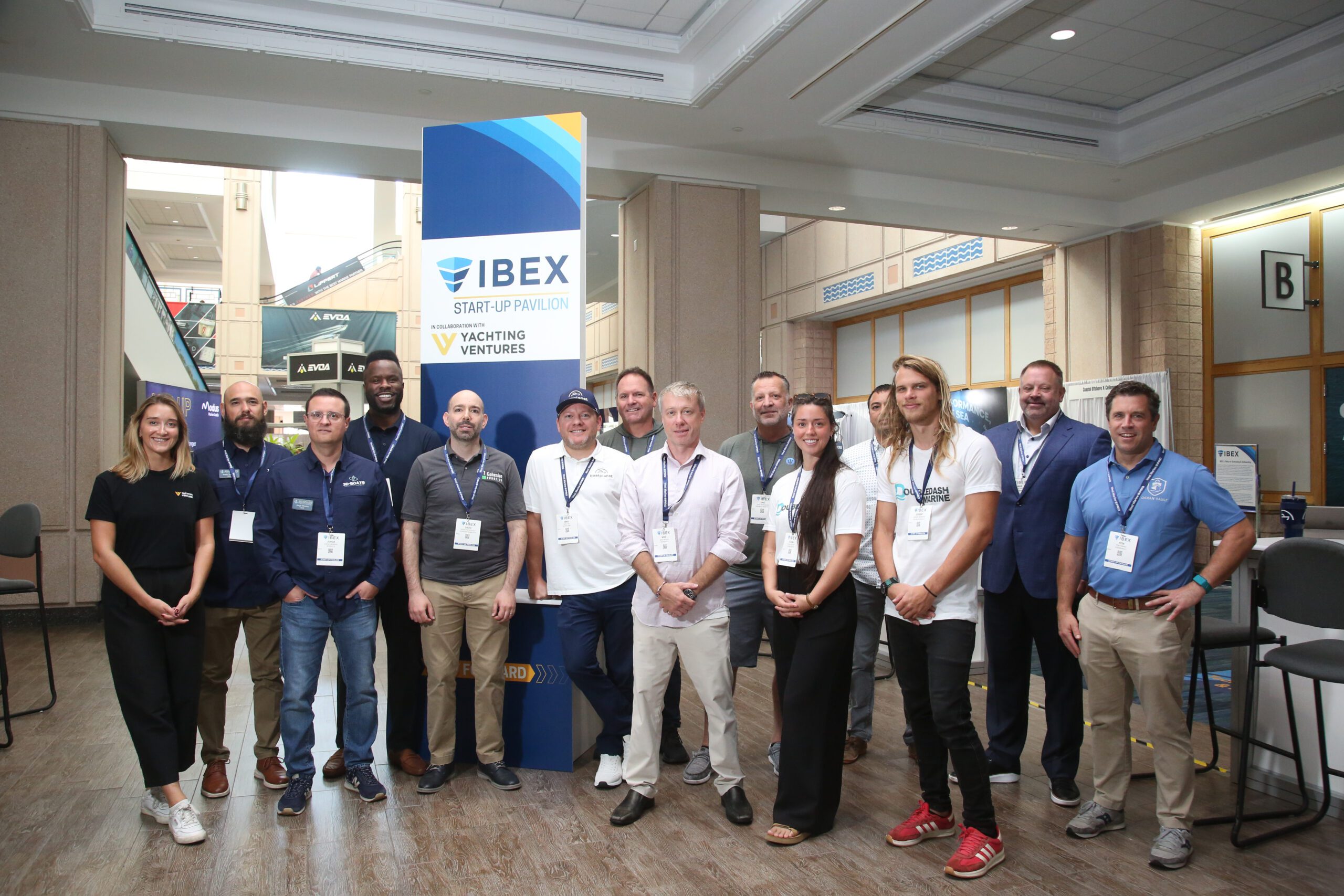
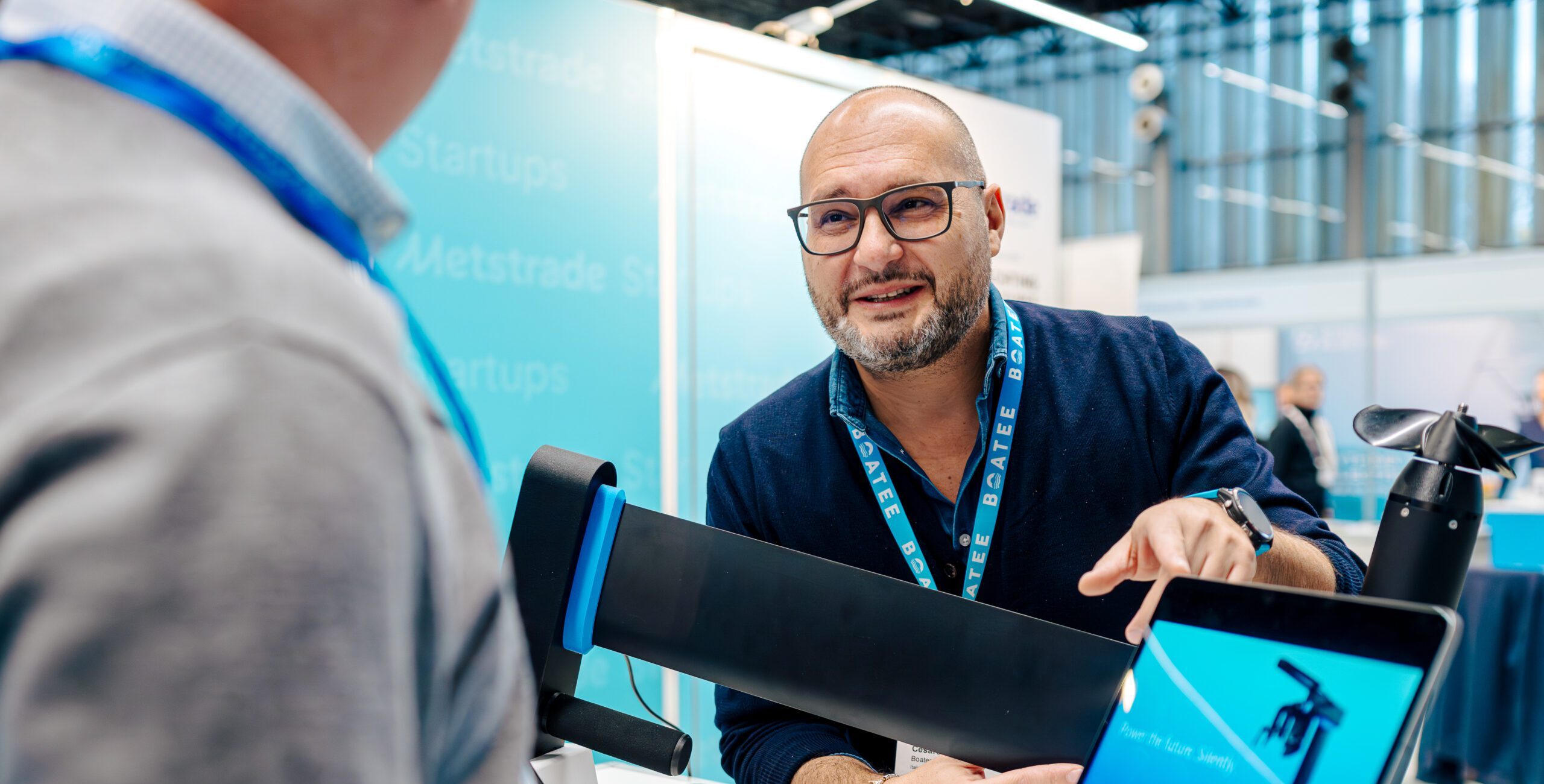
That’s why we’re proud to collaborate with leading industry events such as Metstrade and IBEX, where we run dedicated startup programmes designed to help emerging companies connect with OEMs, boat builders, distributors, investors and strategic partners.
These events provide a powerful platform for hardware founders to showcase their innovations, validate products, build commercial relationships and accelerate growth within the marine industry.
If you’re building a hardware startup and looking to connect with founders, customers and industry stakeholders who understand the journey, we’d love to hear from you.