Updates tailored to you.

For decades, the economics of marina operations have remained relatively straightforward.
Berths generated predictable recurring revenue, complemented by ancillary services such as maintenance, fuel, storage, hospitality and retail. Occupancy, particularly in premium markets, was often the clearest indicator of commercial success.
But across much of the marina sector today, operators are beginning to face a more complex commercial reality.
Waterfront real estate is increasingly constrained, operational costs continue to rise, and physical expansion has become harder to justify both economically and politically.
In mature markets, many marinas have already reached capacity, while new developments face growing scrutiny around planning, environmental impact and infrastructure strain.
Against that backdrop, a more difficult question is emerging: Can marina operators continue to rely on berth fees as the primary driver of growth, or is the model itself beginning to evolve?
The answer is not that berthing has become obsolete. Far from it. Annual contracts continue to underpin the economics of marina ownership and remain a valuable source of recurring income.
But in many locations, berth growth has become finite. Operators cannot simply build more inventory in the way a hotel group might add rooms or a residential developer might add floors.
As a result, attention is increasingly shifting toward a different challenge: how to unlock greater value from existing waterfront assets without significantly increasing physical footprint.
For a small but growing number of operators, the answer may not lie on land at all, but on the water itself.
Floating hospitality is beginning to emerge as a way to create new revenue generating inventory within existing marina footprints, allowing operators to monetise waterfront space in ways that traditional berth models were never designed to achieve.
The reality is that marinas occupy some of the most commercially attractive real estate in the world.
They sit at the intersection of hospitality, leisure, luxury travel and premium lifestyle, often in destinations where land values are exceptionally high and customer expectations increasingly sophisticated.
Yet despite this, large portions of marina infrastructure remain commercially underutilised outside of traditional boating activity.
This becomes particularly visible when considering how consumers are changing.
Luxury travel is becoming increasingly experiential. Guests are placing greater value on privacy, uniqueness and immersion, often prioritising memorable experiences over traditional forms of accommodation.
Waterfront destinations continue to command premium pricing, yet many regions face a growing shortage of premium inventory capable of meeting demand.
For marina operators, the opportunity may lie not in attracting more vessels alone, but in reconsidering what their destination can offer more broadly.
Increasingly, marinas are beginning to resemble hospitality ecosystems as much as marine infrastructure. Restaurants, wellness facilities, private clubs, waterside events and membership driven experiences are becoming more common components of marina strategy.
In many cases, operators are recognising that customer spend per visit matters just as much as berth occupancy. Accommodation, however, remains one of the least explored (and potentially most valuable) areas for expansion.
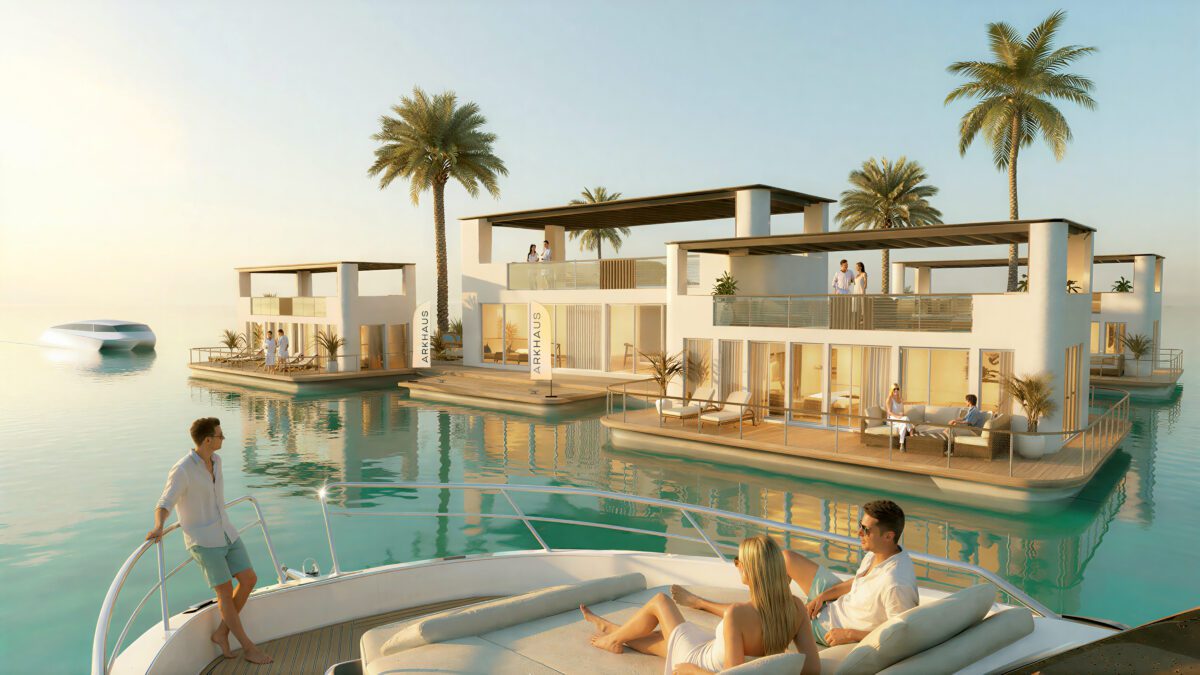
For waterfront destinations, adding hotel inventory is rarely straightforward. Prime waterfront land is finite, expensive and heavily regulated.
Construction timelines are long, planning permissions increasingly difficult to secure, and the economics of large-scale development often complex.
At the same time, hospitality demand continues to grow, particularly in premium destinations where travellers are seeking experiences that feel distinctive rather than standardised.
This tension between rising demand and constrained supply is beginning to create space for alternative models.
Historically, one of the biggest barriers to creating new hospitality inventory has been capital.
New hotels require significant upfront investment, lengthy development timelines and complex development processes.
However, some emerging floating hospitality models are structured differently, with the accommodation asset financed and operated by a specialist partner rather than the marina itself.
This allows operators to participate in premium accommodation revenue without purchasing vessels or funding large-scale construction projects.
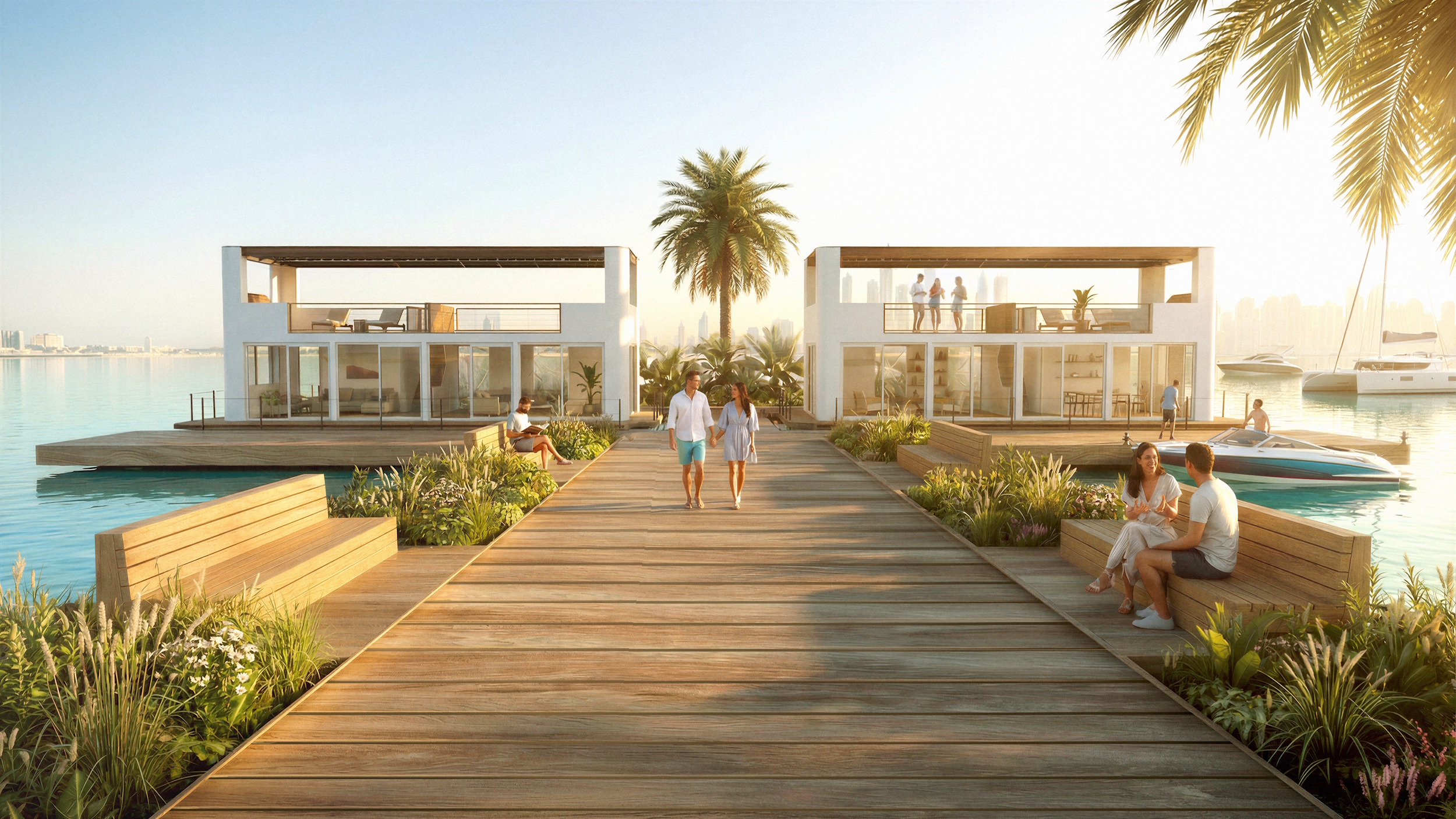
One of the more interesting developments emerging within the sector is the idea of floating hospitality, creating premium guest experiences directly on the water rather than attempting to expand onto land.
Rather than viewing the marina solely as infrastructure for vessels, this approach reframes it as an experiential destination in its own right.
This is the thinking behind ARKHAUS Resorts, a concept designed to transform marina berths into overwater hospitality inventory capable of generating accommodation and experiential revenue.
The model proceeds from a straightforward observation: if waterfront hospitality inventory is constrained, perhaps the answer lies not in building more on land, but in creating entirely new experiences on the water.
For marina operators and resort partners, the potential value extends beyond accommodation itself.
Rather than earning a fixed slip fee, operators have the opportunity to participate in premium nightly accommodation revenue while also benefiting from incremental guest spend across restaurants, bars, wellness facilities, events and other on-site amenities.
The broader effect is not simply the creation of a new revenue stream, but the repositioning of the marina as a more distinctive, experience-led destination.
What makes the approach particularly interesting is that it extends well beyond accommodation.
Floating villas can anchor hospitality packages, wellness experiences, private events, branded memberships and day experiences – revenue streams that align with the broader direction luxury travel is moving, and that do not require additional waterfront land.
For marina operators and resort partners, it represents a potential path to premium accommodation revenue without the land-use constraints, development complexity or capital requirements typically associated with traditional hotel expansion.
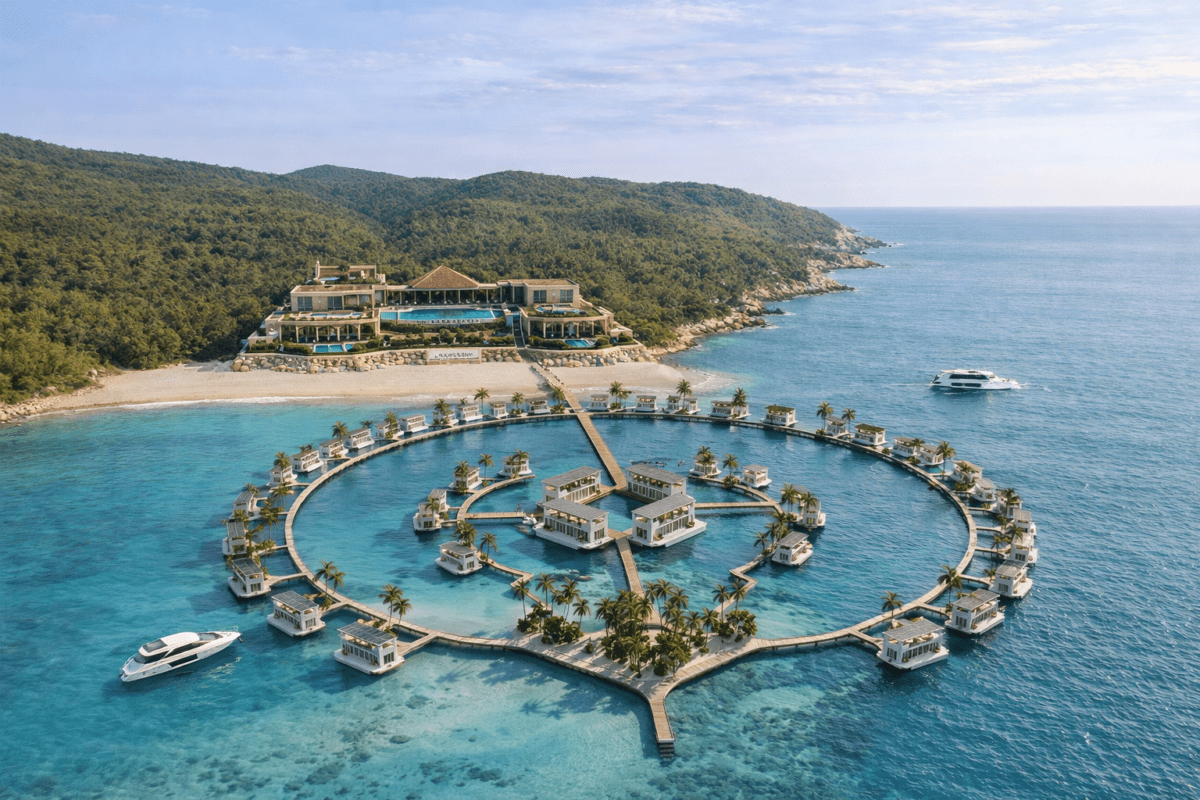
Of course, novel concepts are not enough on their own. Hospitality, particularly at the premium end of the market, is defined by execution.
Guest expectations today are exceptionally high, and success ultimately depends on operational realities rather than architectural renderings or future vision. Comfort, safety, service, amenities and consistency remain fundamental to whether a product earns repeat demand.
This is why experimentation matters.
As new hospitality models emerge, testing, iteration and honest feedback become critical. The future of marina revenue is unlikely to be shaped by theory alone, but by operators willing to explore what genuinely enhances the customer experience while creating commercially sustainable outcomes.
The most successful marina businesses of the next decade may still be built around berths, but they are increasingly likely to think beyond them.
They may operate more like hospitality platforms than infrastructure providers alone. They may place greater emphasis on guest experiences, premium memberships, wellness, events and destination-led revenue streams.
And they may increasingly view the water itself not simply as space for vessels, but as an opportunity for entirely new forms of value creation.
Because while berth fees remain important, many operators are beginning to recognise that relying on them alone may no longer be enough to drive meaningful growth. A marina’s future commercial success may depend less on how many boats it can accommodate, and more on how creatively it can monetise the destination around them.
ARKHAUS Resorts represents one attempt to explore what this next phase of marina evolution might look like in practice.
As demand for more experiential, high-value waterfront destinations continues to grow, concepts like these are beginning to open up new conversations around how marinas can diversify revenue, increase guest spend and create new hospitality inventory without expanding their physical footprint.
For forward-thinking marina operators and real estate developers, the more interesting question may no longer be how to add more berths, but how to unlock greater value from the water they already have. ARKHAUS is currently engaging with those interested in exploring what that future could look like.