Updates tailored to you.

The moment Nicolo Pasini decided to start a yacht company wasn’t on the water. It was the day his daughter was born.
“I started asking myself what I want to do in the future,” he recalls. “How do I make an impact on the world?”
For most people, that kind of question leads to a career pivot or a charity donation.
For Pasini – an engineer with seventeen years in the automotive industry, stints at Lamborghini and BMW, and a lifelong passion for sailing – it led somewhere far more ambitious: building the yacht he always wished existed.
The company he founded is called Pasini Yachts. The name is deliberate. It carries his family name, and with it, a story that stretches back centuries.
In the 17th century, Pasini’s ancestors owned a small fleet of commercial sailing craft. Then, in a single storm, they lost everything: the vessels, the crew, the cargo, and, with no insurance to speak of, the family fortune.
“Now it’s a way of closing the circle,” says Pasini.
That weight of history gives Pasini Yachts something most startups lack: genuine personal stakes. This isn’t just a business, it’s a reckoning.
Pasini had spent years on the water in his free time, and in that time he kept noticing the same frustrations playing out among boat owners – compromises around space, constant reliability issues, and the sheer technical knowledge required just to keep a yacht operational.
When his daughter arrived and he began imagining life on the water with a young child, the problem crystallised sharply.
“A small yacht is not a place for kids,” he says. “The complexity of managing a yacht plus managing a kid ends up in disaster.”
His answer was to look to the automotive world (the industry he’d spent nearly two decades mastering) and ask why the same seamless, intuitive experience that defines a modern car couldn’t be brought to yachting.
“You don’t have to be a technical person, you are able to just jump in and go,” he says of cars. “If that doesn’t exist in yachts, I’ll build it myself.”
Pasini’s engineering credentials are formidable. He spent five years at Automobili Lamborghini, where he took the carbon fibre monocoque of the Aventador from concept through to production.
From there he moved to the BMW Group for nearly eight years, helping launch the carbon body programmes for the i3 and i8, before moving into broader engineering leadership roles focused on cost reduction and production efficiency.
He was eventually drawn back to Italy and to Automobili Pininfarina, the storied Turin-based design house, where he led development on a new project that ultimately never reached production.
The experience, however, sharpened his grasp of company organisation and gave him a clear read on where the automotive industry was heading.
“I saw the crisis that automotive is facing right now,” he says, “and I decided that was the right moment to change direction. To go back to what I really like – being on the sea side – and bring the best of what I learned to the industry.”
Pasini Yachts has been operating in stealth mode for roughly two years.
“It’s not as glamorous as you may think,” he says. “Living in stealth mode means prioritising the project, while still needing to make time for your life, your obligations, your family.”
The image he paints is of late-night design sessions with his Italian co-founder, working through 3D modelling software at 3am, laughing at the absurdity of it. Hardware startups, he points out, take time in a way software ones simply don’t.
He credits his wife as his “first investor” – someone who has believed in the project and given him the space to pursue it.
Convincing her, his wider family, and ultimately himself that the sacrifice is worth it has been its own kind of challenge.
As a founder, the hardest decision was simply to start. “The difference between a dreamer and a founder is taking action.”
As a CEO, the hardest ongoing challenge is deciding what not to do, “Coming from automotive, we have a tendency of working with large budgets and very fancy supplier networks. When you have a restricted budget, you have to prioritise ruthlessly. If you wait for everything to be perfect, you will either never be ready or run out of money before you arrive.”
At the heart of the first Smart Yacht is something Pasini Yachts calls a “platform approach” – a concept entirely standard in automotive for twenty-plus years, and almost entirely absent from marine.
Today’s yachts, he argues, are essentially vessels with a collection of components from different manufacturers that don’t communicate with each other.
The result: no predictive maintenance, no system-wide awareness, and a constant stream of surprises for owners.
“Even your small vacuum cleaner robot tells you, ‘Please change this filter, otherwise in 200 hours I will be stuck.’ We want to bring the same approach to the yacht industry.”
The Pasini platform integrates electrical, electronic, water, and air systems into a single proprietary ecosystem, designed ground-up for the yacht it will power, not retrofitted onto an existing architecture.
The yacht, crucially, is designed around the platform, not the other way around.
And yes, the yacht will be electric. But Pasini is firm on the framing, “We are not an electric yacht company. We are a yachting company focused on creating yachts that are easy to use, accessible and enjoyable for more people. Electrification is simply the technology that enables us to solve real customer problems.”
Before designing anything, Pasini conducted over 200 customer interviews – current owners unhappy with their boats, wealthy non-owners who’d decided against buying, and people actively shopping for a replacement.
“Coming from automotive, we believe the technology push is the wrong way. Market pull is the right way. We have to listen to the client and make a product that actually solves real problems.”
The automotive parallel holds again: in a saturated car market, nobody launches a new model and simply hopes someone buys it.
Brands invest heavily in understanding the customer journey from the moment desire first emerges through to the eventual resale. In yachting, by contrast, the post-sale relationship largely disappears.
Pasini reaches for another analogy to describe what success looks like: Apple.
“What Apple did is not design a product and then try to brainwash everybody that it’s the right thing to buy. They built something one million times easier to use than a competitor — and people bought it. Because it’s easy to use.”
The technical enabler for Apple was the multi-touch screen. For Pasini, it’s the integrated electrical and electronic platform.
But technology alone isn’t enough, “If you have the technology but you don’t know how it will be used from the user’s point of view, you are halfway. You need the idea, but you also need the execution.”
The goal, ultimately, is to make the technology invisible – so invisible that people simply fall in love with being on the water.
Pasini sees the platform itself as a long-term asset that extends well beyond Pasini Yachts. With over 3,000 boat manufacturers worldwide, he believes there will be a significant appetite to license the technology once the first yacht has demonstrated what it can do.
“We want to build a yacht that is a better product thanks to the platform, show the world why — and then we will be able to sell the platform to everybody interested.”
As for what he thinks will look most outdated in yachting within five years? The maintenance programme.
“Everything in automotive is moving toward very long warranty times and peace-of-mind programmes. The role of the manual workshop is becoming less important because the cars don’t break down anymore. We are wishing for the same future for the yachting industry.”
For Nicolo Pasini, that future is personal. It always has been.
With development progressing steadily, the company is now building its pre-series yacht ahead of its first on-water debut.
While enthusiasts will need to wait a little longer to see the first Smart Yacht in action, the milestone marks an important step towards turning the concept into reality.
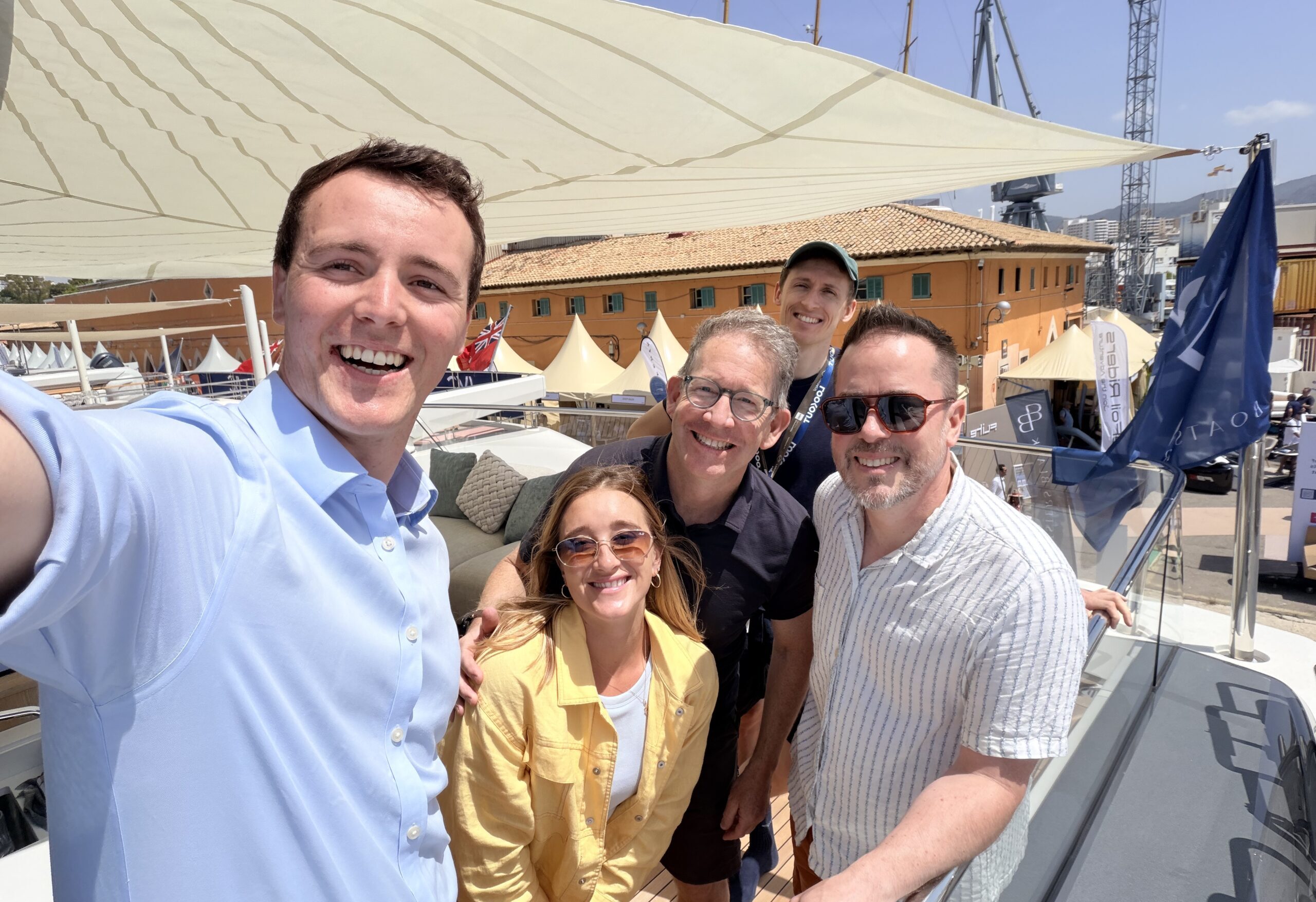
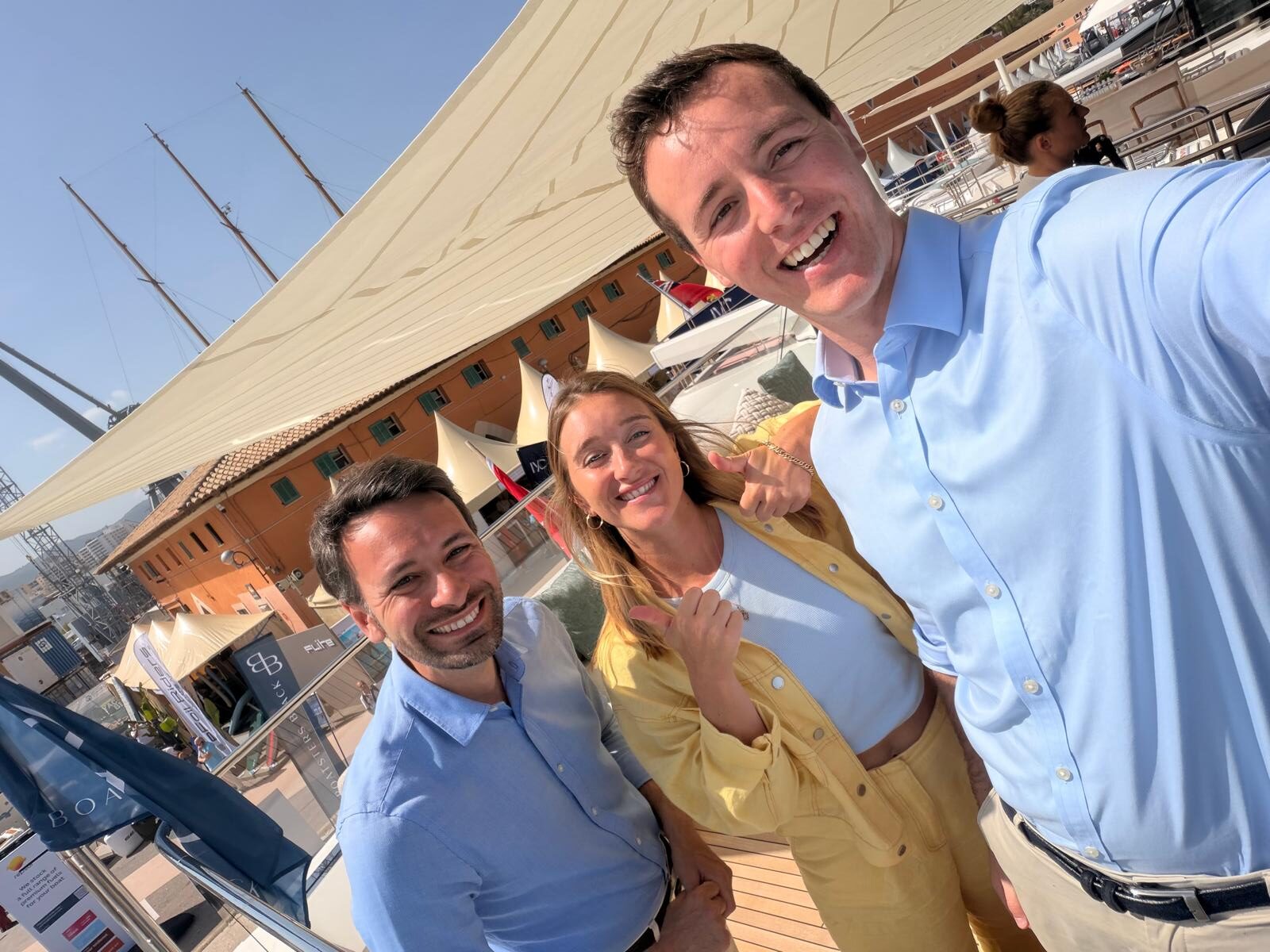
Nicolo Pasini was interviewed as part of the Founder Podcast Series, a collaboration between the Ben Taylor Podcast, Yachting Ventures, and Marine Industry News, filmed on board the San Lorenzo M/Y ON TIME at the Palma International Boat Show in 2026.