Updates tailored to you.
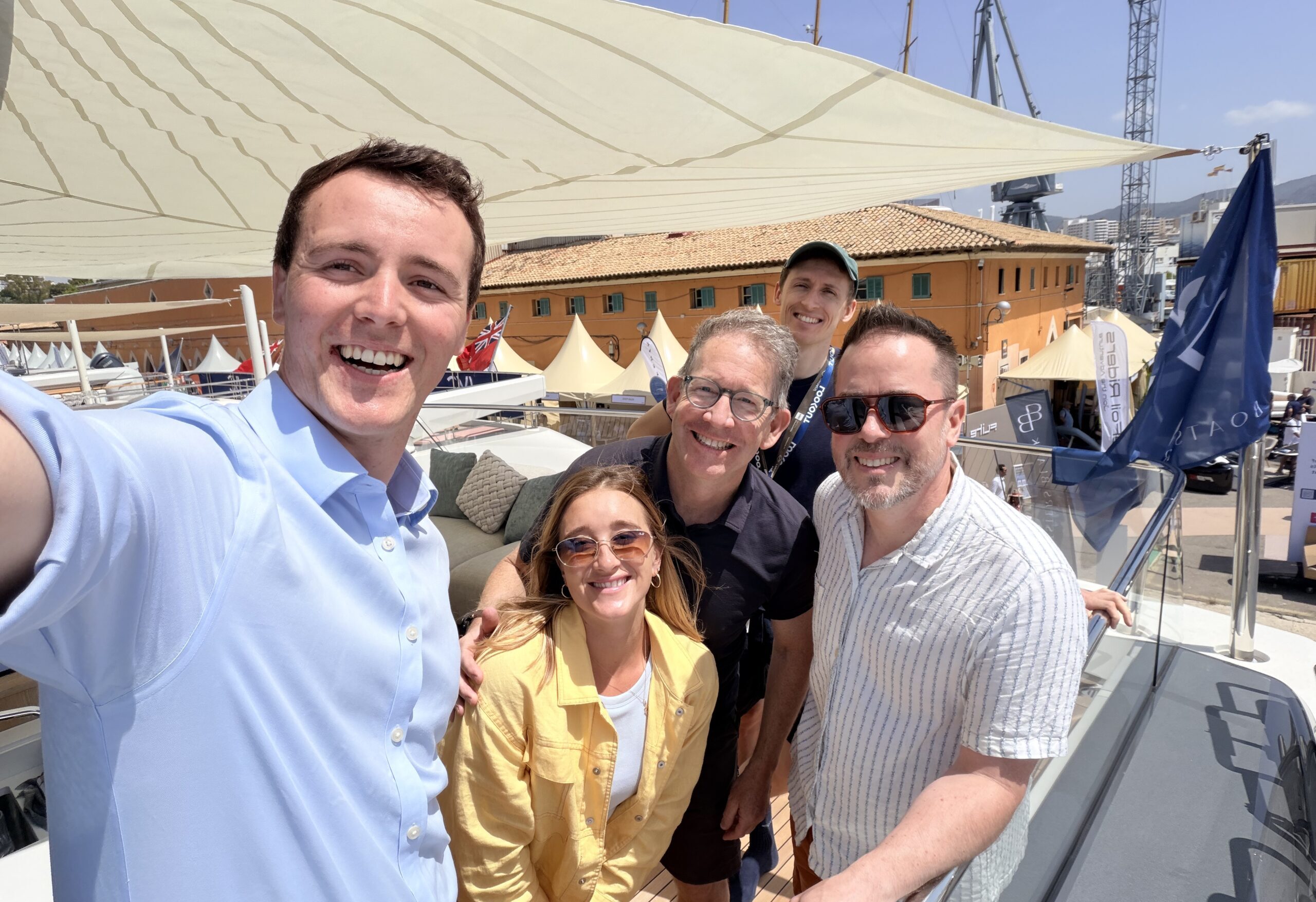

David Rose nearly watched his brother in law kill someone on a lake in New England.
It was dusk. David was water skiing behind the boat. His brother in law simply didn’t see the dark profile of a small craft against the dark water.
They missed, but it was close enough to ask an obvious question: why didn’t the boat do something about it?
“If it had been a car, the car would have put up a warning. The car would have put on the brakes,” David says. “Boats don’t have that technology. That’s why we built LOOKOUT.”
It’s a crisp origin story, but the path that led David to that moment (and from that moment to a working product now installed on over 150 boats) runs through physics, augmented reality, IoT research, and a glasses company you’ve probably heard of. This is his sixth startup.
David’s background is in physics, and his career has been defined by a single recurring question: how do you make a physical environment digitally legible?
At Warby Parker, where he served as head of research, that question applied to the human face. His team built the virtual system that uses the LiDAR sensor in your phone to map the terrain of your face and project glasses onto it accurately.
The underlying challenge, spatially anchoring digital information to a physical surface, would turn out to be directly transferable.
He also wrote two books during this period. The first, Enchanted Objects, explored the internet of things. The second, SuperSight, examined how digital layers of information will increasingly be overlaid on the physical world we see.
Both were, in retrospect, early sketches of what LOOKOUT would eventually become.
When he began thinking about the marine environment, the connection was immediate.
“Think about marine, it’s a totally unstructured environment. There aren’t enough signs. It’s foggy. It’s at night. You really need some guidance. And you need safety.”
The parallel to the automotive industry was striking. Blind spot detectors, rear view cameras and collision warnings are now standard in cars to the point where you can barely buy a new one without them.
Boats, despite operating in a far more hazardous and unpredictable environment, have barely moved.
The original concept for LOOKOUT was more ambitious than the current product, and perhaps too ambitious for where the technology was at the time.
The initial vision was to use augmented reality to project bathymetric terrain data through the water’s surface, making the hidden hazards below visible to anyone on board.
Four years ago, the company filed a patent for the spatial anchoring of that kind of safety information in a boating context.
What David and his team discovered in the process was that boats are already bristling with sensors (heading data, sonar, AIS, radar) and that the real opportunity was to tie all of that together and add the one thing that was genuinely missing: cameras running computer vision.
“Computer vision has come such a long way in the last five to seven years,” he says.
LOOKOUT trained its own neural network for what’s called scene segmentation, scanning the surface of the water, identifying and tracking everything that isn’t water. Small craft. Swimmers. Whales. Debris. Containers. Anything you don’t want to hit.
The system tracks those objects, builds a 3D scene around the vessel, and pushes that data to the cloud so that boats behind can benefit from what boats ahead have seen.
The product that reached the market looks different from that original prototype, which contained its own satellite heading sensor, AIS, stereo cameras, rear facing cameras, and thermal cameras in a single enclosure.
The current approach is more modular: a processor (“the brain”) that plugs into a boat’s existing NMEA 2000 network and integrates with whatever camera systems are already on board, including the thermal and daylight FLIR units that are common on better equipped vessels.
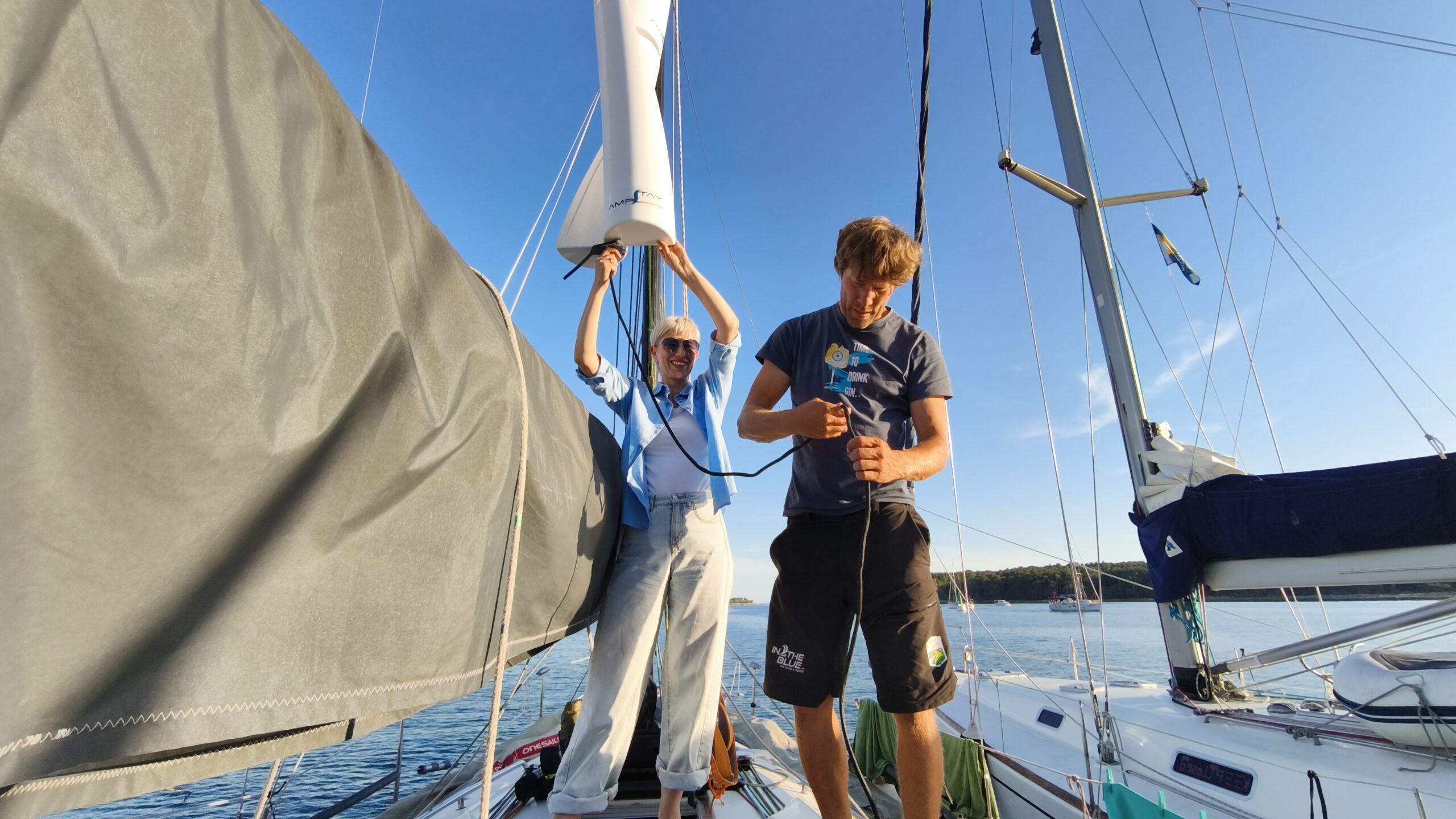
LOOKOUT also makes its own mast mounted camera combining full colour night vision, 4K daylight, and a 360 degree lens that sees above the horizon in every direction, even with a zoom view forward.
David is direct about one of his core lessons from the product launch: in marine, brand association matters more than almost anywhere else.
“Somebody who owns a boat makes a very considered decision about what they put on it. There isn’t the same early adopter ecosystem as in apps. Brands really matter in marine.”
The strategy he’s pursued is to build LOOKOUT‘s credibility by association with names people already trust.
LOOKOUT is part of Garmin’s OneHelm ecosystem.
The camera uses a C-View pole (a component marine installers already know and trust) rather than a proprietary mount that would require education and explanation.
The nav light housing is made by Lumitech, which is already embedded on 65 boat brands, rather than a custom LED that would need to earn its own certification.
“Don’t innovate in all dimensions,” he says. “Let’s not build our own C-View pole. It’s a trusted brand. When an installer asks how it connects and you say ‘C-View pole,’ they say, ‘Oh, I know C-View.’ Done.”
He’s applied the same logic at a marketing level, pursuing rebate partnerships with insurance providers and technology services, so owning a Starlink or holding an account with a marine assistance provider might earn you a discount on LOOKOUT.
The goal in each case is the same: attach the brand to other brands of trust and let the association do its work.
One of the more compelling aspects of LOOKOUT‘s model is what happens as the installed base grows.
Each unit on the water is generating training data and specifically, capturing what David calls “low confidence crops,” the edge cases the neural network hasn’t seen before. A sea turtle in the Maldives. A particular kind of debris in a particular condition of light.
Each new sighting improves the classifier for every boat on the network.
LOOKOUT is currently working with NOAA on whale classification, with a Viking-Garmin vessel gathering data daily.
The application emerged partly from the regulatory pressure around whale protection on the US East Coast, where proposed vessel speed restrictions would have been economically devastating for the fishing industry.
Computer vision based detection offers a more targeted alternative: find the whales, define an exclusion zone, let other boats know, and set appropriate speed advisories rather than blanket restrictions.
The most significant item on LOOKOUT‘s R&D roadmap is something David calls “auto dodge”: a form of what he describes as episodic autonomy.
Today’s marine autopilots are, in his characterisation, blind. They hold a heading or follow a route with no awareness of what’s in the way.
Radar and AIS data sit alongside them on the same network but don’t feed into their decision making. A boat on autopilot in fog, heading toward a contact on radar, will keep heading toward it.
LOOKOUT‘s auto dodge would change that.
By fusing the computer vision data, the AIS data, the radar data, and a planned route imported from any of the major navigation apps, the system would generate a safe path that routes automatically around whale exclusion zones, kayakers, and any other hazard that only camera based vision can detect.
The broader vision is a helm experience David describes as “glanceable”, fusing multiple sources of truth into a single display that a captain can understand in a few seconds and then return their attention to the water.
“You only want to see the data that’s useful to you. Forget everything else. Make it as intelligent and intuitive as possible.”
David is candid that he has no particular desire to be in the hardware business.
He talks about the camera system as a “reference design” – something that exists to demonstrate what’s possible and to prove the integration works, but that he’d ultimately prefer Garmin or another established marine electronics maker to manufacture at scale.
“Our expertise is AI and software. I don’t want to be known as the colour night vision camera people. I want to be known as the company that synthesises all the data on the boat and makes the future helm experience.”
The dream articulated at the far end of that roadmap is something like a Tesla software experience for boats: bespoke integrations with major yacht builders, digital twins of individual vessel models, destination recommendations that speak to the identity of the brand, all overlaid with the augmented reality and safety intelligence that makes navigating genuinely easier.
He draws the parallel to the car industry, where engine specs have largely given way to software capability as the primary differentiator.
BMW doesn’t lead with horsepower any more. It leads with door-opening alerts for cyclists, cameras that let you check on your car from your phone, and systems that make lane changes safer. “Those are the differentiators. And I think they should be for boats as well.”
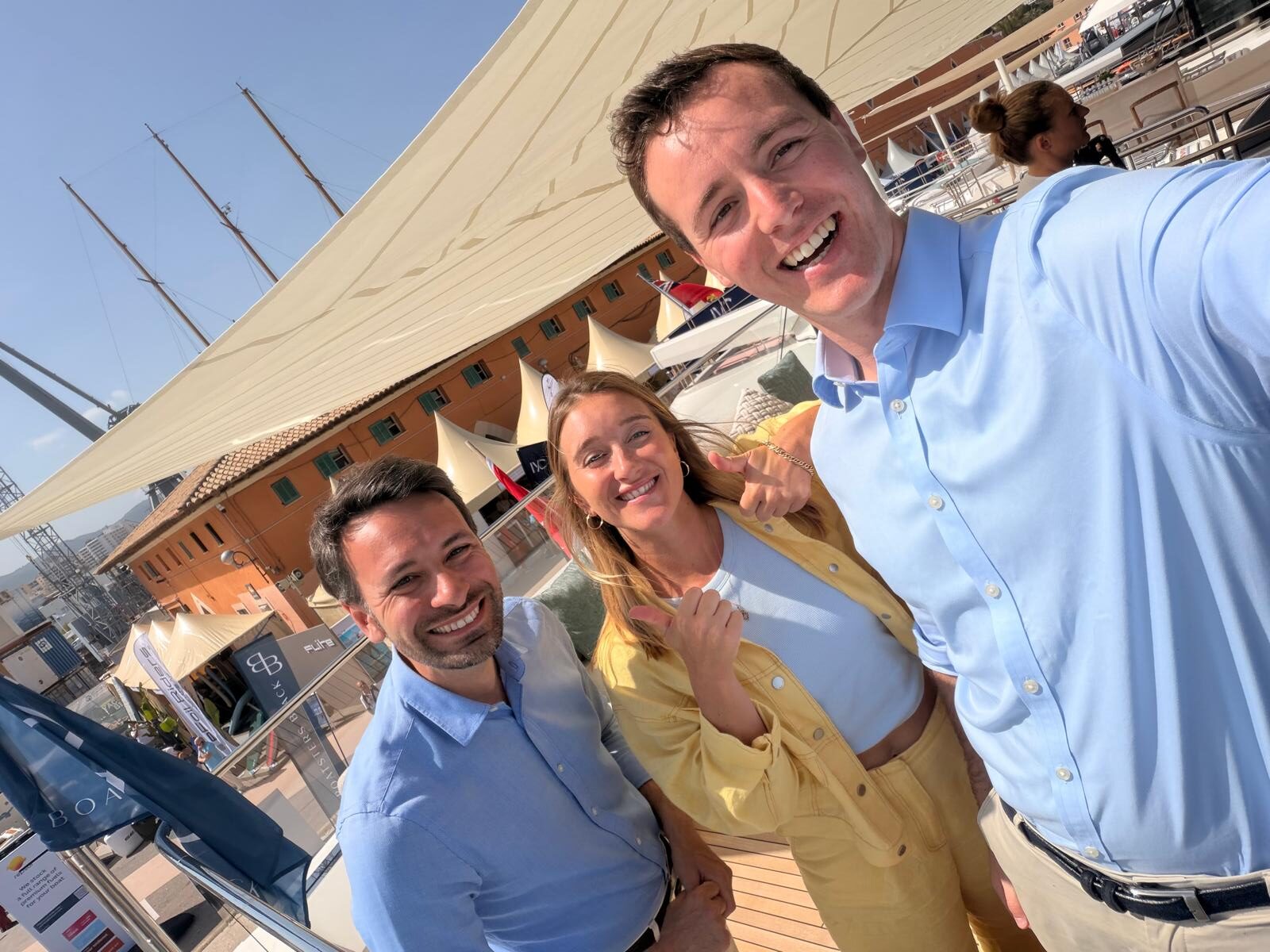
David Rose was interviewed as part of the Founder Podcast Series, a collaboration between the Ben Taylor Podcast, Yachting Ventures, and Marine Industry News, filmed on board the San Lorenzo M/Y ON TIME at the Palma International Boat Show in 2026.